Italy runs on two clocks. One is short, loud and standing up; the other is long, loose and slightly orange in the glass. The morning espresso and the evening aperitivo are both ways of being social in public, and both revolve around a bar counter — but they ask completely different things of your body and your schedule. Get them confused and you will either be gulping a drink while everyone else is chatting, or hovering awkwardly by a counter while a barista waits for you to finish a coffee you have been nursing for twenty minutes.
The clock decides everything
Timing is the first and clearest difference. The espresso window is early and narrow: roughly from opening until mid-morning, with a second smaller surge after lunch, when people take a quick coffee before returning to work. It is a punctuation mark in the day, not an event. You arrive, you drink, you leave.
Aperitivo happens at the other end of the working day, usually starting around six and thinning out by nine. It is a transition, a way of not going straight home, and in summer it stretches further into the warm evening. In the south, and in city neighbourhoods where dinner starts late, it can slide comfortably toward nine or ten. The espresso bar brackets a task; aperitivo brackets dinner.
Inside the espresso bar: two minutes of theatre
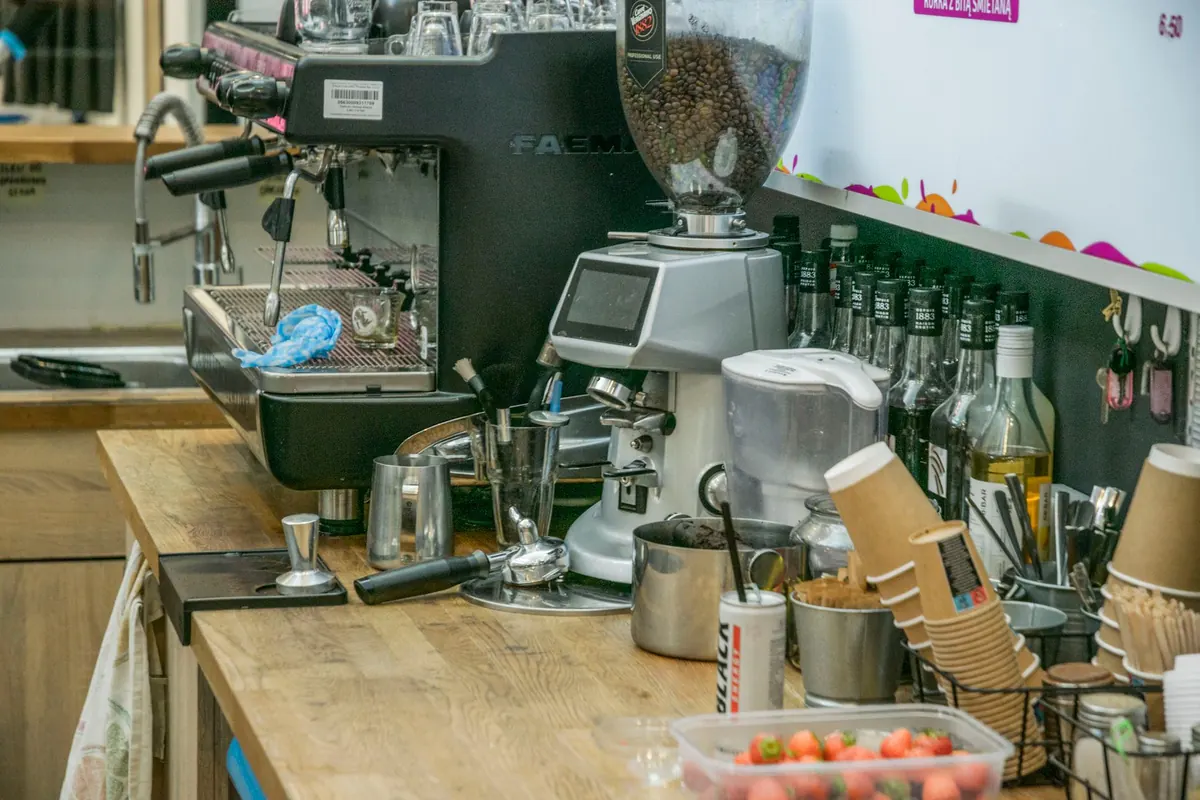
The espresso bar is efficient in a way that looks chaotic until you know the sequence. Regulars walk in, nod at the barista, and their coffee is already moving. Nobody queues politely for a table; you stand, you drink, you are gone. That is not rudeness, it is the whole design.
How to order without freezing
- Decide whether you are standing at the counter (al banco) or sitting at a table. Sitting costs more, because you are renting space and service. This is worth knowing before you order.
- In many bars you pay first at the register and take the receipt to the counter. In others you order first and pay at the end. Watch what the person ahead of you does, or simply ask.
- Say what you want clearly and briefly: un caffè means an espresso. Ask for un cappuccino and you will get one — though ordering milk-heavy coffee after late morning may earn you a gentle look.
- Drink it standing at the counter, in two or three sips. Add sugar before your first sip if you want it; nobody will judge either way.
- Leave. If the bar is busy, lingering is the one real faux pas.
The pleasure of the place is its density. In five minutes at a busy counter you will hear a barista greet four people by name, an argument about football, and a discussion of the weather that somehow involves three strangers. Then everyone is gone.
Aperitivo: the slow hour
Aperitivo is a different animal. You sit, or you perch at a high table outside, and you order something bitter and low in alcohol — a spritz, a Negroni, a vermouth — or a glass of wine. The drink comes with small food: olives, crisps, taralli, a few squares of cheese, perhaps a small plate of focaccia. In some bars, especially outside the big cities, a modest buffet is laid out and you help yourself.
The rhythm is unhurried by design. This is the hour when colleagues become friends, when a first date stays harmless, when a group of neighbours argues pleasantly about nothing. Conversation is the point, and the drink is the ticket. In recent years the border with dinner has blurred: apericena — aperitivo generous enough to replace a meal — has become common, though purists will tell you it defeats the purpose.
Side by side: what each one asks of you
- Time: two to five minutes at the espresso bar; an hour or more at aperitivo.
- Posture: standing, at a counter, preferably with one foot toward the door; seated or leaning, often outside.
- Volume: brief and functional at the bar; conversational and meandering at aperitivo.
- What you order: a coffee, maybe a pastry or a tramezzino; a bitter cocktail, wine or a non-alcoholic spritz, with snacks included.
- Payment: quick and small at the counter, often with coins; a single bill at the end, split or not, with tipping kept modest.
- Company: yourself, a colleague, the newspaper; friends, family, a date, sometimes children in the early evening.
- Exit: immediate — the coffee is finished, so you are too; gradual, after a second drink and a last round of goodbyes.
What each ritual says about daily life
The espresso bar is about the day's structure. It marks the start of work, the break in the middle, the moment before a train. It assumes that small pleasures should be cheap, quick and available on every second corner, and that a good barista is a minor civic figure. It is a ritual of competence: knowing what to order, where to pay, and when to move on.
Aperitivo is about the day's release. It assumes that the boundary between work and home deserves a proper ceremony, and that the ceremony is better with other people. Where the espresso is private and precise, aperitivo is social and forgiving. One rewards efficiency; the other rewards patience. Both, notably, happen in public — the bar counter and the pavement table are extensions of the living room, and standing alone among strangers is treated as perfectly normal.
Doing both well: a practical guide
Start with one espresso in the morning, standing, at a bar that looks busy. Order a caffè, pay attention to whether people pay first, and drink it within a couple of minutes. If you want to sit, accept the higher table price without complaint — it is not a tourist surcharge, it is how the system works.
For aperitivo, arrive between six-thirty and seven-thirty if you want a table, and later if you are happy standing. Order one drink and let the snacks arrive. Eat lightly; the food is a gesture, not a meal, unless the bar is explicitly offering apericena. If you are driving, or simply not drinking, ask for a non-alcoholic cocktail — every bar can make one, and nobody will look at you strangely. Keep an eye on how the bill is handled: asking to pay separately is common enough, but announcing it early saves confusion.
Two small habits will make you welcome in both settings. First, greet the staff when you walk in — a simple buongiorno or buonasera is expected, not optional. Second, match the room: be quick where people are quick, and slow where they are slow. Do that, and you will have understood more about daily life here than any guidebook can tell you.
Photo: SHOX ART / Pexels